At the Royal Society of Arts
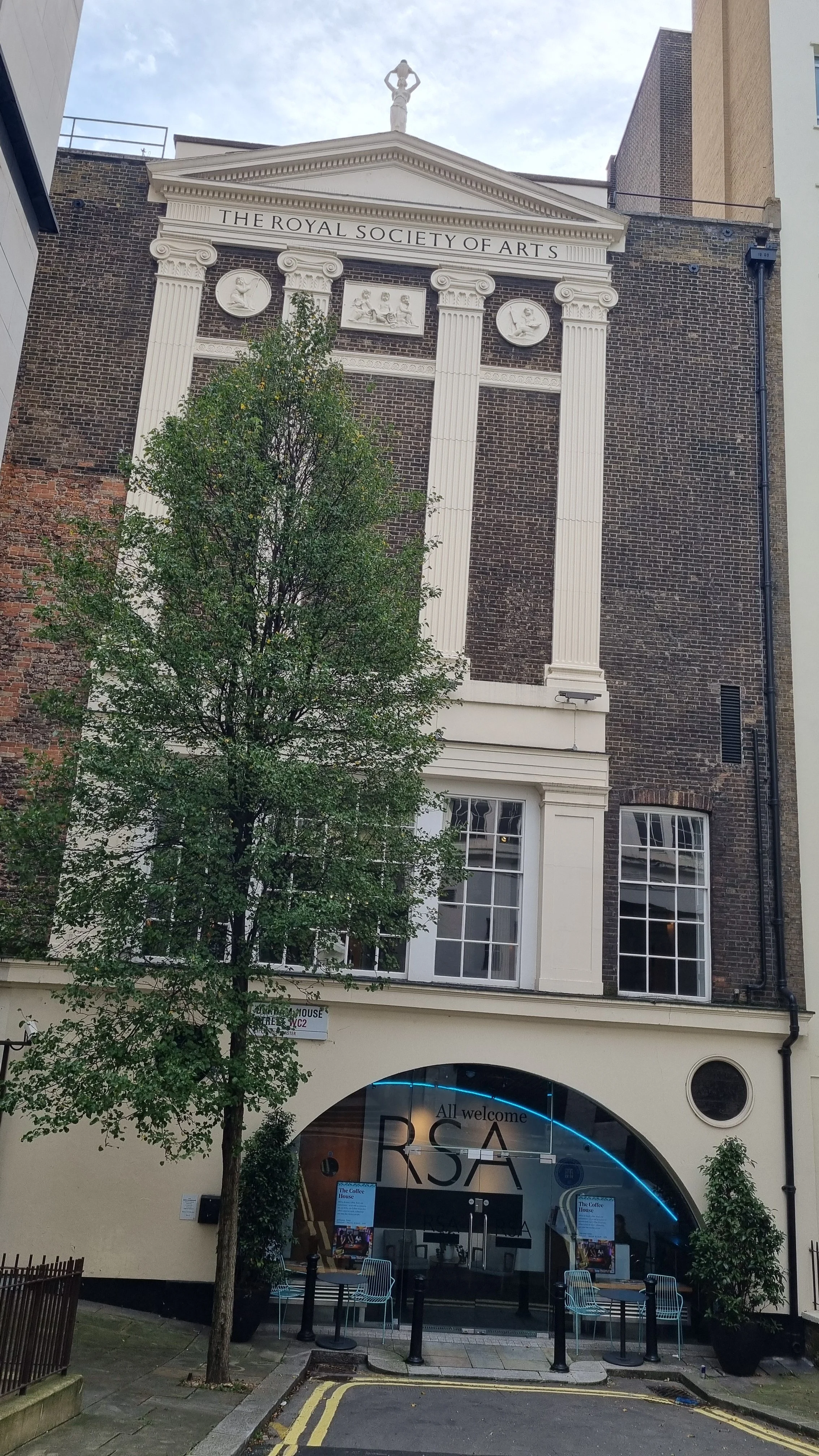
The Royal Society of Arts, London
Recently, I was lucky enough to visit the archive of the Royal Society of Arts, which still flourishes in its eighteenth-century premises just off the Strand! Originally the Society for the Encouragement of Arts, Manufactures and Commerce, the RSA was established in 1754 at the nearby Rawthmells coffeehouse in Covent Garden by founder William Shipley and 10 of his contemporaries. They believed in the power of human ingenuity to change society for the better, and in particular that creativity might serve the common good.
So, what brought me to the RSA? I was looking for information about an eighteenth-century Scottish composer, James Oswald (1710-1769), who spent the majority of his career in London from 1741 until his death in 1769. I knew Oswald was a member of the society in the early 1760s, and had come across one reference which suggested that he had been proposed by none other than Benjamin Franklin!
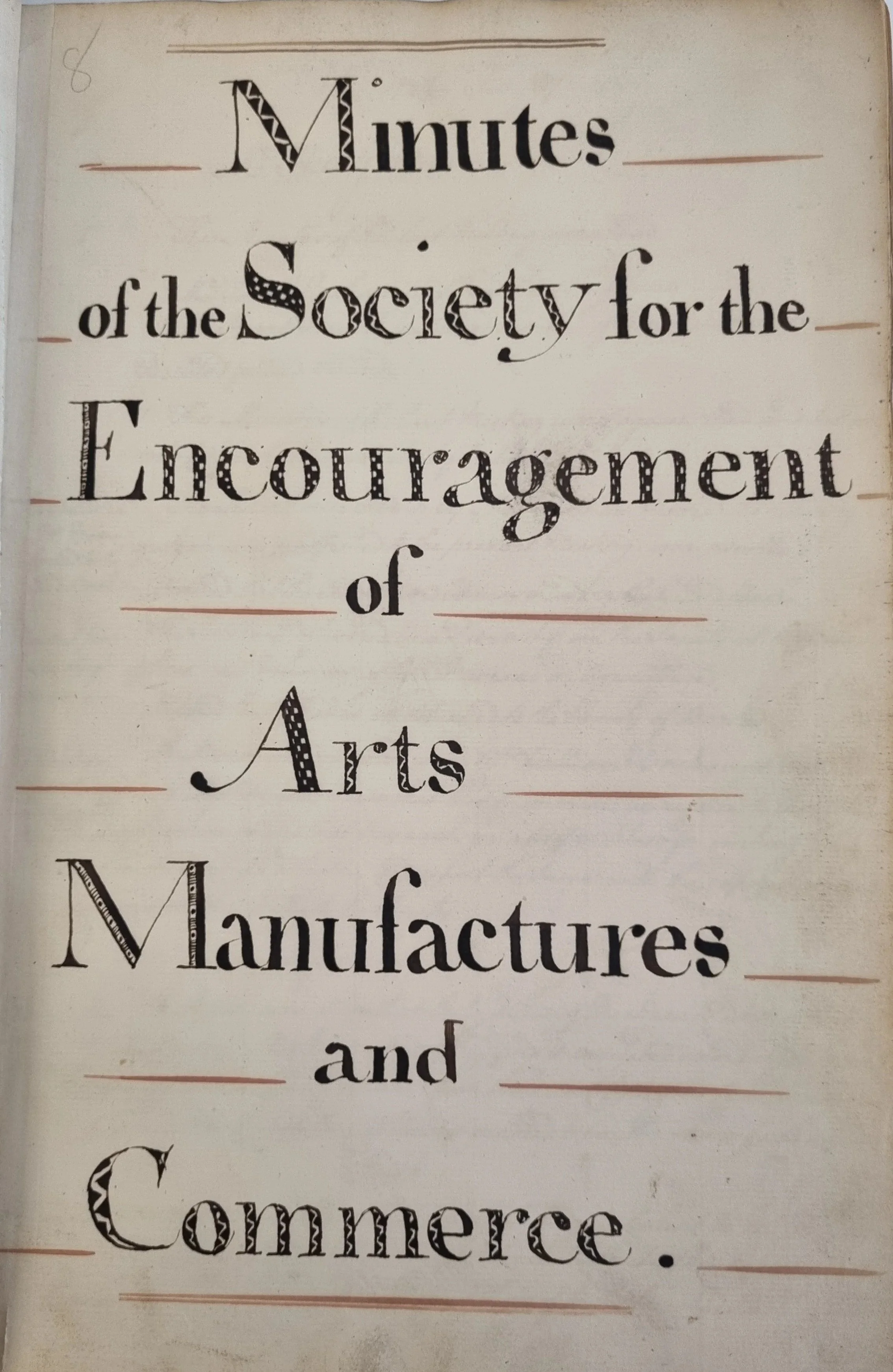
Minute Book of the Society for the Encouragement of Arts Manufactures and Commerce
My first port of call was the first minute book of the society from the earliest days of the society. I love reading through historic minutes of meetings; they can tell you a huge amount about the organisation in question - its aims and priorities at any particular moment; the personalities of those involved and the character of their contribution; disputes, challenges, and much more.
Of course, all this depends on the level of detail included by the clerk or person responsible for taking the meeting notes, but records from this period are often rich in detail, and in this case I was able to confirm that James Oswald was indeed proposed for membership in July 1762 by the American polymath Dr Benjamin Franklin.
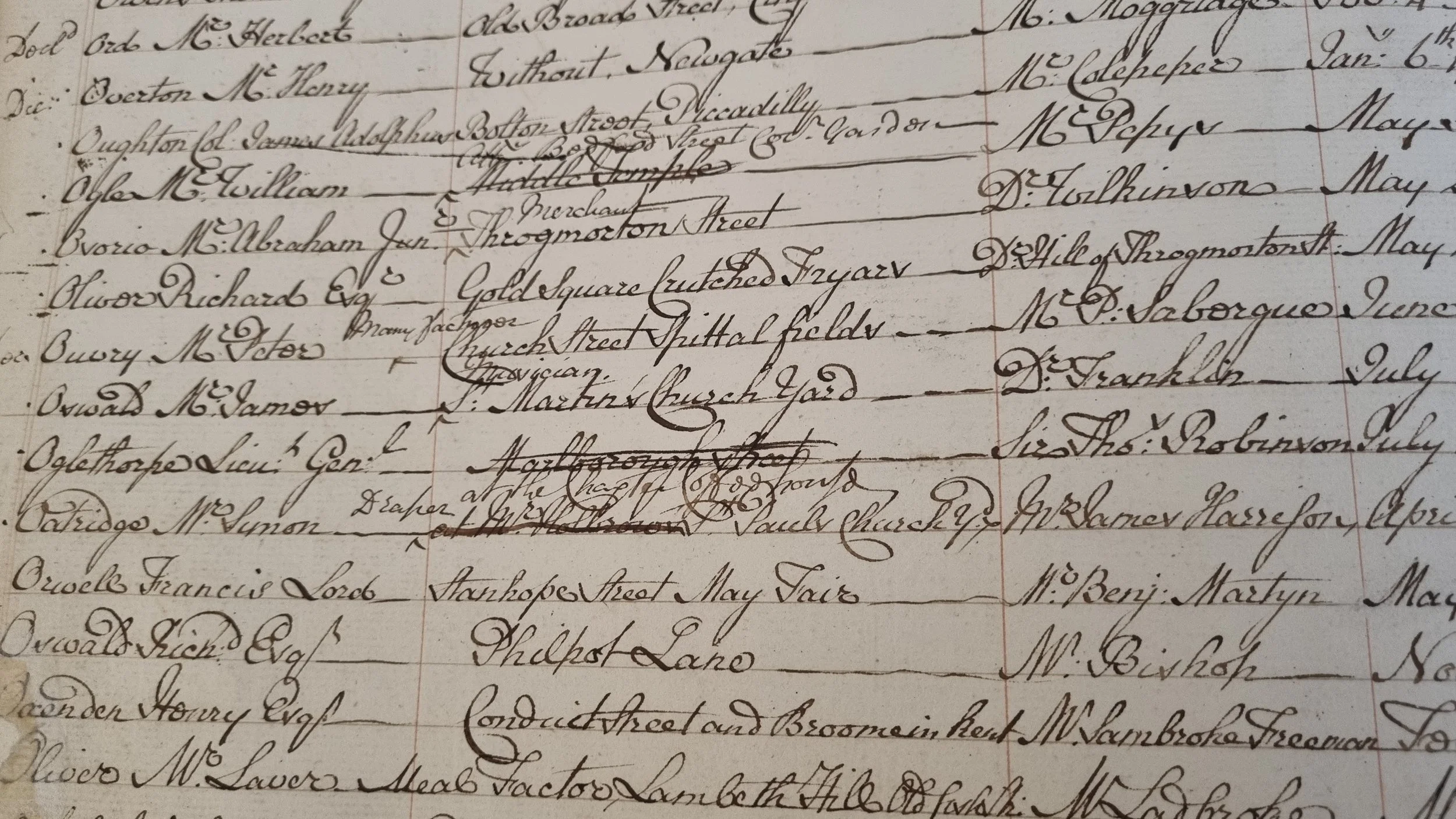
James Oswald’s entry in the RSA’s Membership Subscription Book
Why did James Oswald join the Society? Very few musicians were members - the only others I can identify in the eighteenth century were Thomas Arne and Charles Burney - and most ‘artistic’ members were visual artists. The answer probably lies in Oswald’s existing acquaintance, perhaps friendship, with Benjamin Franklin. Franklin was resident in London from 1757, and he certainly knew of Oswald’s musical performances. In a much-quoted letter of 2 June 1765 to his friend Lord Kames on the subject of Scottish music, Franklin praises Oswald’s interpretation of Scots tunes, without accompaniment: “This support, in my opinion, the old tunes do not need, and are rather confused than aided by it. Whoever has heard James Oswald play them on his violoncello, will be less inclined to dispute this with me.”
We must remember that Covent Garden, and in particular, the area around Charing Cross, was a close-knit community creative endeavour in the mid-eighteenth century. Oswald’s music shop and lodgings on the pavement of St Martin-in-the-Fields were just 4 minutes’ walk away from Franklin’s house in Craven Street. The pair also shared particular interests, particularly musical invention: Oswald ‘reinvented’ the Aeolian Harp in the early 1750s (more on that another day) and Franklin invented the Glass Armonica a few years later. So, we might imagine that it was their shared passion for both music and innovation that drew these two men to the Society for Arts, Manufacture and Commerce.
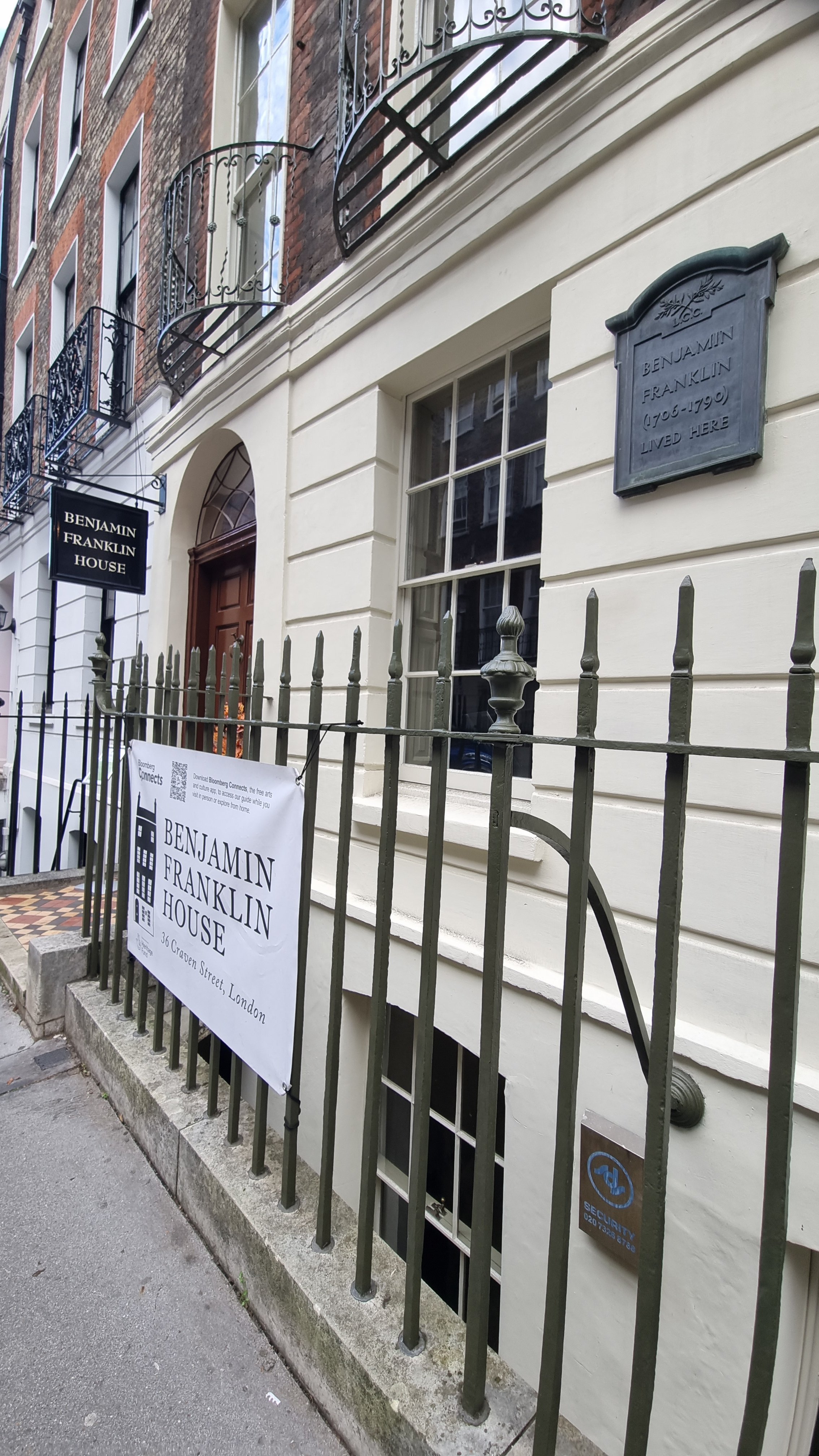
Benjamin Franklin House
After my visit to the RSA, I headed around the corner to Benjamin Franklin House, where Franklin lodged from 1757 to 1775. There are many original features, and, without furnishings, you really get a sense of the character of this Georgian townhouse itself.
Franklin’s rooms were on the first floor, and you can see in the picture on the right his small balconies. A guide told me that Franklin used to rise early, at first light, and invariably stood (naked!) upon the balcony for some minutes to give his skin an ‘air bath’, believing that this practice promoted health and well-being!
If you’re around the Strand with a couple of hours to spare, I would thoroughly recommend a visit to Benjamin Franklin House (entry only £8), before heading round to the RSA. It’s a friendly and welcoming place with a wonderful cafe (open to the public) in the basement, serving fresh, hearty lunches and cakes!